Understanding Millenco Door Lock Models
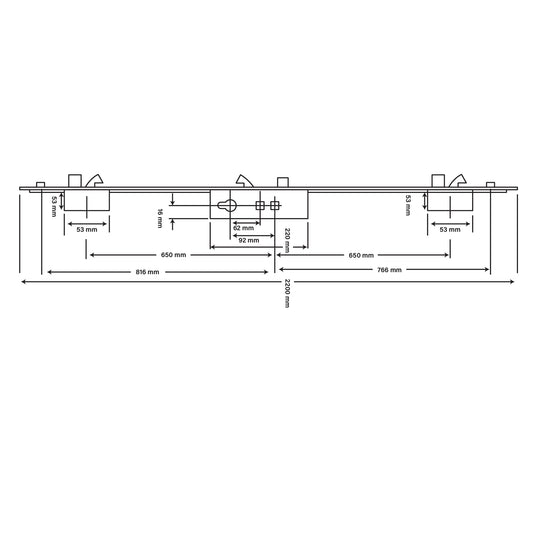
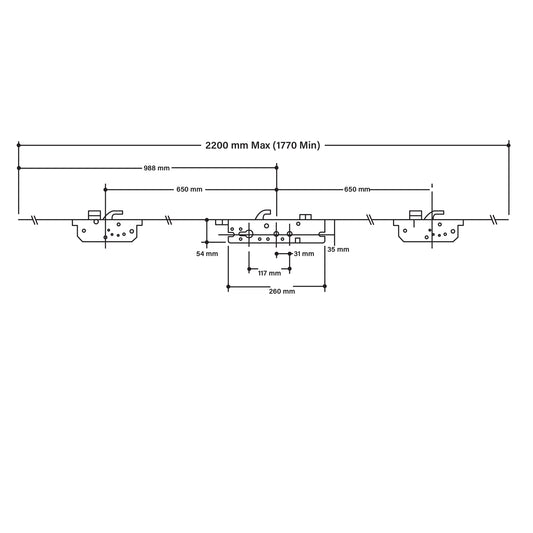
Millenco manufactures several distinct lock series, each designed for different door configurations. The Mantis 1 is the original Millenco lock, featuring unique PZ centre measurements of 117mm and 86mm. The Mantis 2 and Mantis 3 followed as updated models, alongside the Lockmaster range.
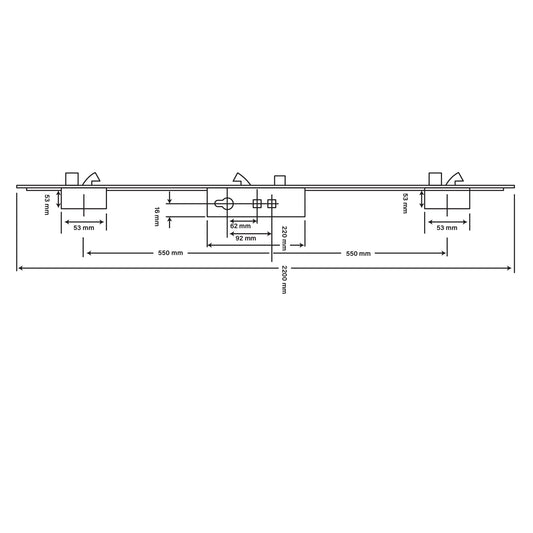
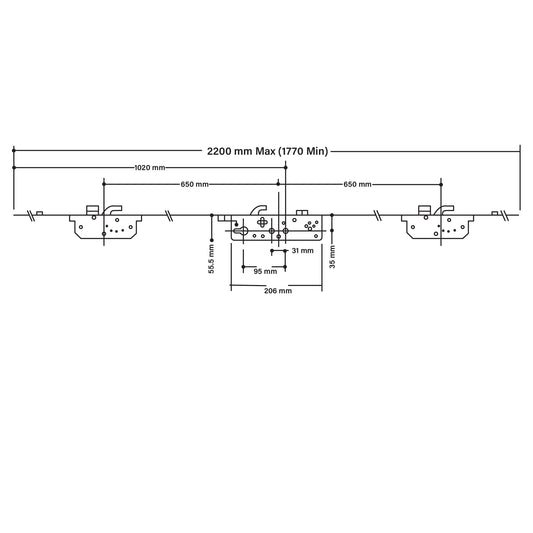
All Millenco locks featured here come with a 35mm backset as standard, though some Lockmaster models are also available with 45mm backset. Different models feature varying locking point configurations—you'll find options with 3 hook 2 deadbolt, 3 hook 2 deadbolt 2 roller, 1 hook 4 roller, and 2 hook 3 deadbolt variations.
To identify which Millenco lock you have, check the faceplate—the metal strip visible on your door's edge—for branding. This simple step helps narrow down your replacement options before you start measuring.
How to Identify Your Existing Millenco Lock
Before ordering a replacement, you need to identify your current lock accurately. Start by examining the faceplate for any branding stamped into the metal. Look for 'Millenco' or related brand names such as Yale, Mila, Fullex, GU, Lockmaster, Maco, Winkhaus, ERA, or Avocet.
Next, note the locking point types and their positions. Does your lock have hooks, rollers, mushrooms, or shootbolts? Counting these and observing where they sit along the door edge helps confirm you're ordering the right configuration.
Taking photos of your existing lock—particularly the faceplate and the full lock body from the door edge—proves invaluable if you're unsure about identification. These images help specialists confirm the exact model and ensure compatibility before you commit to a purchase.
Identification is essential before ordering a replacement. Getting this step right prevents the frustration of ordering the wrong part and ensures your new lock will fit properly.
Critical Measurements: How to Measure Your Millenco Lock
Accurate measurements make the difference between a perfect fit and an expensive mistake. The good news? You can take all measurements with the lock still in your door—no need to remove it until you're ready to fit the replacement.
PZ Distance (The Most Critical Measurement)
The PZ distance is the measurement from the centre of the keyhole to the centre of the square spindle hole (where your door handle connects). This must match your replacement lock exactly. Measure from the centre of the keyhole to the centre of that square hole—not to the edge.
Common PZ distances include 92mm, 70mm, and 117mm, but do not assume any size is standard. You must measure your existing lock. Millenco Mantis 1 locks are known for their unique 117mm and 86mm PZ measurements.
Backset
Measure from the metal faceplate—the metal strip on the door edge—to the centre of the keyhole. This is crucial: do not measure from any plastic lip or trim on the door. Measure from the metal strip itself. Backset is almost always 35mm on UK uPVC doors, occasionally 45mm.
Faceplate Width
Measure the width of the metal faceplate. Common sizes are 16mm, 20mm, and 22mm, which must match your existing lock for proper installation.
Measure twice, order once. These three measurements—PZ distance, backset, and faceplate width—determine whether a replacement lock will fit your door.
Millenco Product Range & Specifications
Millenco offers several lock configurations to suit different door setups:
Millenco Mantis 1 features the original design with 3 hook 2 deadbolt and 3 hook 2 deadbolt 2 roller configurations. These locks have 35mm backset and the distinctive 117mm PZ measurement. The Mantis 1 also comes in a 1 hook 4 roller variant.
Millenco Mantis 2 includes slave mechanism options with 35mm backset, available in 95mm and 117mm PZ configurations. The 3 hook 2 deadbolt 2 roller setup provides comprehensive security.
Millenco Mantis 3 offers multiple configurations including 3 hook 2 deadbolt 2 roller and 2 hook 3 deadbolt 2 roller, with 35mm backset and 92mm PZ. A shorter 550mm version is also available for specific door heights.
Millenco Lockmaster provides twin 2 spindle options with 35mm backset as standard, also available in 45mm backset for doors requiring that specification.
Prices range from approximately £25 for repair parts to £175 for complete lock mechanisms, depending on the model and configuration. Repair parts are available, including 117/86 repair cams and cam swapping services for Mantis 1 locks.
Locking Point Types Explained
Understanding the terminology helps you describe your lock accurately when ordering:
Hooks/Hookbolts are locking points that hook around keeps (the metal plates fixed to your door frame). These provide strong resistance against forced entry.
Rollers/Mushrooms are locking points that press against keeps rather than hooking around them. They help compress the door seal and maintain weatherproofing.
Shootbolts are bolts that extend upward into the top of the frame or downward into the threshold, providing additional security at the door's extremities.
Deadbolts are additional locking points that provide enhanced security, often working alongside hooks or rollers.
Keeps/Striking plates are the metal components fixed to your door frame that the hooks, rollers, and bolts engage into when you lock the door.
An exact match of locking point positions makes installation straightforward, as your new lock will engage with the existing keeps without requiring frame modifications.
Compatibility & Replacement Considerations
If the PZ distance, backset, and faceplate width match your existing lock, it will fit. The locking point positions should also be compatible with your existing keeps for smooth operation.
Millenco locks are designed primarily for uPVC doors but can work on various other door types including composite doors. Like-for-like replacement is usually straightforward when measurements match—this is the most reliable approach for homeowners replacing a failed lock.
Before ordering, double-check your measurements. Measure twice, order once. This simple precaution prevents ordering the wrong part and saves time and frustration.
If you're unsure about identification or compatibility, send photos of your old lock to your supplier. Clear images of the faceplate, the full lock from the door edge, and any visible branding help specialists confirm the correct replacement.
Installation & Adjustment Guidance
Ambitious DIYers may complete the replacement job successfully, but for guaranteed safety and proper installation, use a certified locksmith. Professional fitting ensures everything works correctly without damage to your door or frame.
If your door isn't locking smoothly after replacement, don't panic—adjustment is often straightforward:
- Check that keeps are aligned with locking points
- Adjust keeps in or out for proper engagement and to achieve smooth locking action and proper compression of the door seal
- Check whether the door has dropped—hinges may need adjustment
This is often a frustrating situation when a lock has failed, but like-for-like replacement is usually straightforward when you have the right measurements and matching product. The key is patience and accurate measurement before ordering.
Ordering Your Millenco Replacement Lock
Ready to order? Ensure you have these details confirmed:
- Accurate measurements: PZ distance, backset, and faceplate width
- Locking point configuration: Number and type of hooks, rollers, and deadbolts
- Photos: Clear images of your existing lock if you're uncertain
Stock availability varies by model, so check product listings for current availability. Many specialist suppliers offer same-day or next-day delivery options, getting your replacement to you quickly when you need it most.
Both trade and DIY customers can find competitive pricing on Millenco replacement locks. Whether you're a locksmith, window fitter, or homeowner tackling the job yourself, the right measurements ensure a successful replacement.
If you're still uncertain after measuring, don't hesitate to send photos for identification assistance. Getting the right lock first time saves time, money, and frustration.
Frequently Asked Questions