Winkhaus Multipoint Lock Range Overview
Winkhaus offers several trusted ranges designed for like-for-like replacement on uPVC and composite doors. The main models include Cobra, Scorpion, Thunderbolt, and AV series locks—all multipoint mechanisms that secure your door at multiple points along the frame for enhanced security and weather sealing.
These locks are built for straightforward replacement when your existing mechanism fails. If you can identify your current lock and match the key measurements, you'll be able to find a compatible replacement. Both homeowners and trade customers rely on these systems for dependable protection and long-term reliability.
How to Identify Your Existing Winkhaus Lock
Before ordering a replacement, you need to identify your existing lock accurately. Start by checking the faceplate—the metal strip running along the door's edge. Look for the Winkhaus brand name stamped on this plate.
Next, take three critical measurements:
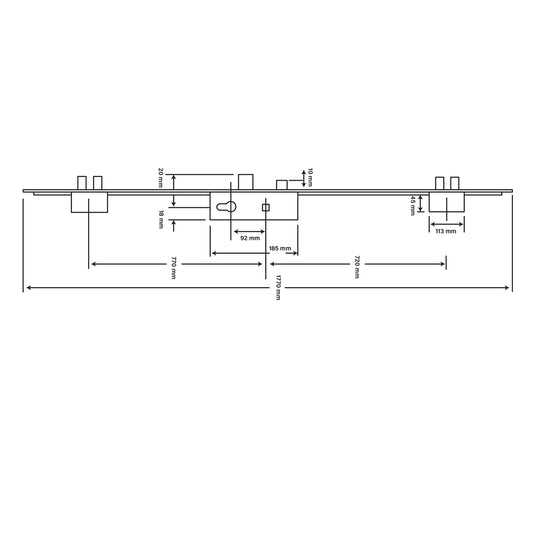
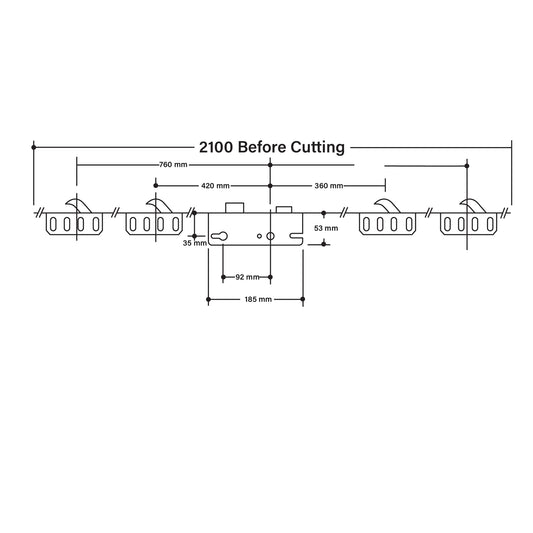
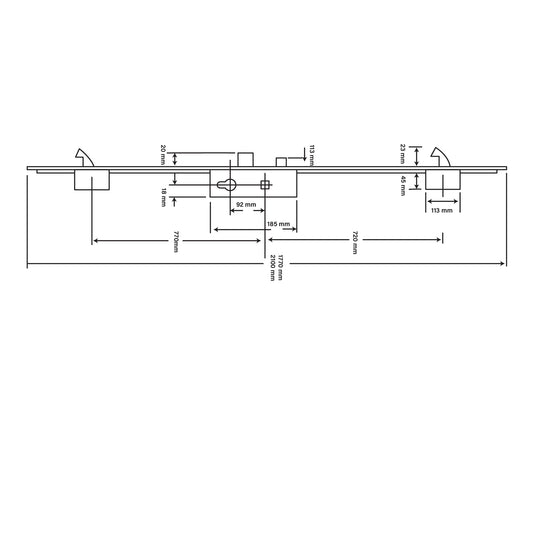
PZ Distance: This is the most important measurement. Measure from the centre of the keyhole to the centre of the square spindle hole (where the handle sits). This distance must match your replacement lock exactly. Common sizes include 92mm and 70mm, but never assume—you must measure your specific lock.
Backset: Measure from the metal faceplate to the centre of the keyhole. Measure from the metal strip itself, not from any plastic lip or trim on the door. This is typically 35mm or 45mm on UK uPVC doors.
Faceplate Width: Measure the width of the metal faceplate. Common sizes are 16mm, 20mm, and 22mm. This must match your existing lock.
Finally, note what type of locking points your lock has—hooks, rollers, mushrooms, or shootbolts—and roughly where they're positioned. If you're uncertain about any identification details, send photos of your existing lock for assistance.
Winkhaus Cobra Lock Models
The Cobra range offers versatile configurations for various door applications. The Cobra 2 Hook is available in both 16mm and 20mm faceplate widths, making it suitable for different door profiles. For those needing a non-handed solution, the Cobra 4 Hook is available in a 35×92 configuration.
Cobra STV models provide flexibility with 35mm, 45mm, and 55mm backset options, accommodating different door constructions. The Cobra Trulock 4 Hook variant serves specific applications where additional security points are required. These locks represent reliable mechanical locking technology with multiple locking points for effective door security.
Winkhaus Scorpion and Thunderbolt Models
The Scorpion range features the 3 Hook 2 Roller configuration, available in 35×92 sizing. The Scorpion SLK XL also uses this 3 Hook 2 Roller setup, providing smooth operation with a combination of hooking and rolling locking points.
Thunderbolt models offer robust 5 Deadbolt configurations with 45-92 PZ and 20mm radius faceplate options. The Thunderbolt is also available with 45mm backset and 20mm radius faceplate, suitable for doors requiring deadbolt-style security rather than hook-based systems.
Winkhaus AV Automatic Locking Systems
For properties with automatic or motorised locking, the AV range provides slam-shut functionality. AV2 models feature 45mm backset options and automatically engage when the door closes. The system includes 12v DC power supply units and motor components for reliable automatic operation.
The AV4 autoLock range represents innovative automatic locking technology, with locks that throw automatically when the door is closed using a new hook design. For fire door applications, intumescent kits are available specifically for AV2/AV3 installations, ensuring compliance with fire safety requirements.
Measuring Your Lock: Step-by-Step Guide
You can take all necessary measurements without removing your lock from the door—you only need to remove it when you're ready to fit the replacement.
Start with the PZ distance, measuring from the centre of the keyhole to the centre of the square spindle hole. This measurement must match exactly. Common sizes exist, but your door may have a different specification, so always measure rather than assume.
For the backset, measure from the metal faceplate only—ignore any plastic trim or lip on the door surface. Measure to the centre of the keyhole. This is almost always 35mm on UK uPVC doors, occasionally 45mm.
Measure your faceplate width: 16mm, 20mm, or 22mm are the standard sizes. This dimension must match your replacement lock to ensure it fits properly in the door edge preparation.
Finally, check that the locking point positions on your replacement will be compatible with the existing keeps (striking plates) on your door frame. An exact match makes installation straightforward and avoids frame modifications.
Installation and Adjustment
When your measurements match correctly, like-for-like replacement is usually straightforward. The new lock should fit into the same space and align with existing frame keeps.
After installation, the keeps on your frame may need adjustment in or out for smooth locking action. Check that all keeps are aligned with their corresponding locking points. If the lock isn't engaging smoothly, verify that the door hasn't dropped—hinges may need adjustment to restore proper alignment.
Proper keep adjustment also helps achieve good compression of the door seal, improving both security and weather protection. Take time to test the lock operation fully before considering the job complete.
Frequently Asked Questions